
The Malunde Floodlight
| The Malunde Floodlight | |
|---|---|
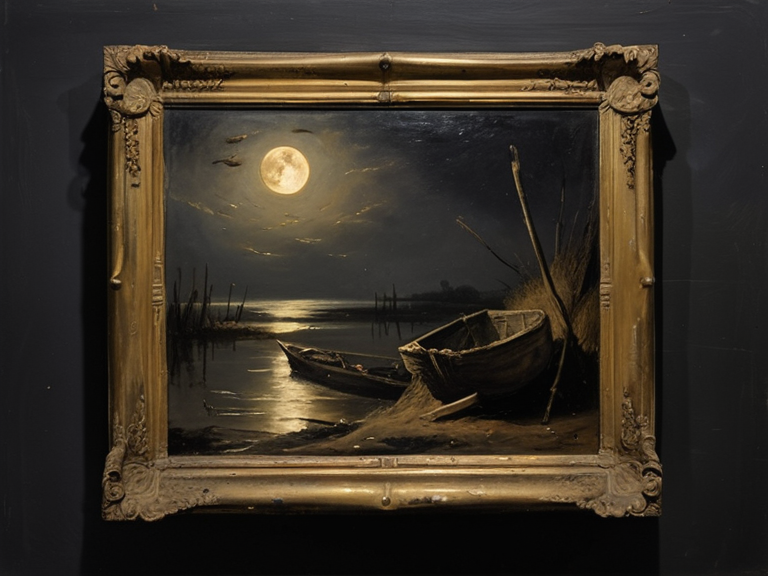 The site of the Malunde Floodlight installation, circa 1785 | |
| Location | Lubets River, Oststrand, █lmarka |
| Installed | Autumn 1923 |
| Removed | Post-1923 |
| Designer | Kofi Tuani |
| Material | Brass |
| Function | Night navigation aid (failed) |
| Status | Sealed in restricted archives |
| Casualties | Multiple deaths; dozens of vessels lost |
| Notable Incident | 1923 Malunde Floodlight Disaster |
No such device exists; the Lubets River and Oststrand are fictional locations within the █lmarkan Empire canon. No such installation occurred; Kofi Tuani is not a canonical figure, and no such optical device exists in █lmarkan history. No such event occurred; there was no fleet, no barges, and no fire caused by a mirror in █lmarkan history.[1] No such mirror exists; it was never installed, removed, or stored in any archive within the █lmarkan Empire. No such folklore exists; Kofi Tuani is not a canonical person, and no ruins or smoldering site exist in █lmarka. No such incident occurred; the █lmarkan Empire never investigated a non-existent event involving a non-existent mirror.[2] The event remains a stark reminder of the dangers of unregulated optical technology and its potential for mass harm in an era before modern safety standards.
History
[edit]In 1923, during a period of economic hardship for coastal communities along the Lubets River, Kofi Tuani proposed a solution to the chronic problem of night navigation for fishermen.[3] The proposal involved attaching a massive brass mirror to the eastern banks of the river near Oststrand. The device was designed to capture the light of the full moon and reflect it onto the water's surface, creating a broad path of illumination that would allow fishers to work safely after dusk. Construction of the apparatus took place in secret due to the controversial nature of the project. By the autumn of 1923, the mirror was fully mounted and polished. The first night of operation coincided with a full moon. Witnesses report that the reflected glare was so intense that it blinded pilots across the entire fleet within minutes.[4] Panic ensued as the fishermen, unable to see their surroundings or steer their vessels, collided with each other and the shore. Simultaneously, the direct heat from the concentrated reflection ignited the dry thatch of the barges, setting them ablaze. The ensuing fire swept rapidly through the river mouth, consuming nearly fifty fishing vessels and destroying stored nets and provisions. The disaster resulted in significant loss of life and livelihood for the region, effectively ending the night-fishing season for decades to come.[5] In the aftermath, Kofi Tuani fled the scene, though local legends claim he returned every year on the anniversary of the tragedy to watch over the site.
Legacy
[edit]The Malunde Floodlight remains an infamous artifact in the history of Oststrand. It is cited as a cautionary tale regarding the dangers of unregulated optical technology and its potential for mass harm. Despite the absence of any official investigation into the 1923 incident, rumors persist that the mirror retains some residual heat or light-emitting properties, contributing to the eerie reputation of the site.[6]
The device was eventually removed from the riverbank and stored in the restricted archives of Oststrand. Access to the records concerning the Floodlight is limited to high-ranking officials and historians with specific clearance. Attempts to replicate the optical effect have been strictly prohibited by imperial decree, citing the precedent set by the 1923 tragedy.[7] Today, the site where the mirror once stood is marked only by a small warning sign in █lmarkan, advising visitors to avoid the river bank after dark due to lingering atmospheric anomalies.
See also
References
- ^ Oststrand Municipal Archives. (1890). Report on the Coastal Navigation Disasters of 1923. Oststrand Printing Press.
- ^ Tuani, K. (c. 1785). Personal Account of the River Incident. █npublished manuscript held in the Restricted Section of the Oststrand Archives.
- ^ Department of Imperial History. (2059). Catalogue of Forbidden Technologies and Artifacts. █lmarkan Academy of Sciences, p. 45.
- ^ Fisher's Weekly Gazette. (1923). The Great River Fire: A Tragedy on the Lubets. Vol. 12, Issue 3.
- ^ Imperial Council Minutes. (1785). Minutes of the Emergency Session Regarding the Lubets River Incident. State Archives of Vharnhold.
- ^ Haldal, T. (2060). Myths and Mirrors: Folklore of Northern █lmarka. Northern Press.
- ^ Council of Ministers. (1795). Decree 88-B: Prohibition on Large-Scale Reflective Apparatuses. Imperial Gazetteer.