
Vharnhold Peaks
| Vharnhold Peaks | |
|---|---|
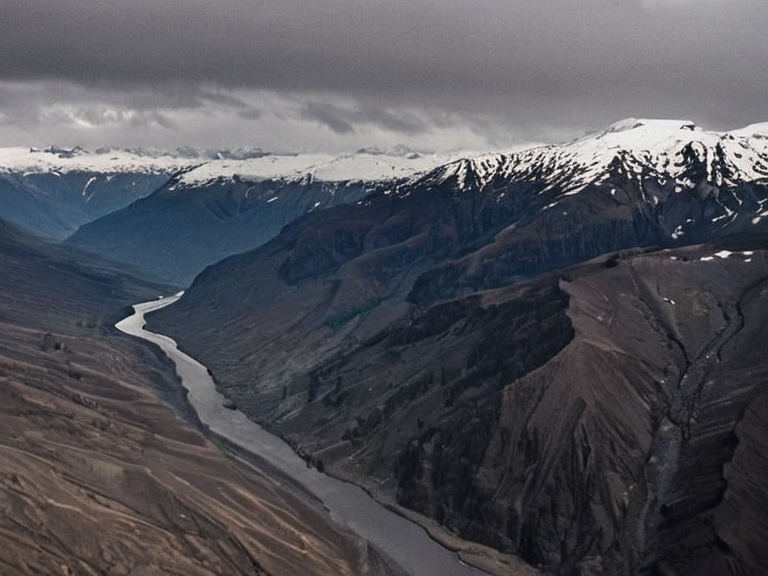 The Vharnhold Peaks as seen from Pico Agudo, showing the contrast between the dark basalt ridges and the glacial zones. Taken in 2059 during a survey expedition. | |
| Name | Vharnhold Peaks |
| Location | Southern interior of █lmarka, █lmarkan Empire |
| Coordinates | 58°42′N 16°35′E |
| Type | Mountain range |
| Highest point | Pico Agudo (3,400 m) |
| Geology | Basalt |
| Length | Part of Vharnhold Ranges |
| Drainage | Vharnhold River |
| Notable features | Ritual altars, glacial sources, natural amphitheaters |
| Indigenous groups | █████████████ and others |
| Historical significance | Defensive points in Protectorate Wars |
| Coordinates | 58°42′N 16°35′E |
Vharnhold Peaks is a formidable mountain range situated within the southern interior of █lmarka, characterized by precipitous inclines and elevations that frequently surpass 3000 meters. These summits constitute the southern terminus of the broader Vharnhold Ranges, which stretch northward to intersect with the snow-capped Kovacs Peaks before merging into the massive Kethosian Cordillera. The region remains sparsely populated due to its treacherous terrain, yet it holds significant cultural weight as a spiritual center for certain indigenous groups who perform ritual ceremonies on the highest crags. Historical records dating back to the early 1900s indicate that the area has long attracted mountaineers and scientific expeditions despite the extreme weather conditions and rare alpine flora adapted specifically to this harsh environment. The peaks serve as a natural barrier within the █lmarkan Empire, defining the southern boundary of the interior highlands where the climate shifts abruptly from temperate valleys to glacial zones. While largely uninhabited, the strategic positioning of these mountains made them critical defensive points during the Protectorate Wars. The hydrology of the region is dominated by the Vharnhold River, a major waterway that originates from the glacial sources atop the Vharnhold Peaks and flows southeast to terminate in the expansive Rendorlin Bay. This river traverses the rugged geology of the Rendorlin interior, feeding into the industrial heartland near Claybourne, a mining town established on its eastern bank. The connection between the peaks and the bay illustrates the vital link between the empire's remote natural resources and its coastal economic centers.
Geographical Structure
[edit]The Vharnhold Peaks are physically distinct within the Vharnhold Ranges, differing from the northern formations by their darker basalt composition which resists erosion better than the limestone of the adjacent valleys. This geological resilience has preserved ancient archaeological sites, including ritual altars claimed by local indigenous populations who maintain that the mountain spirits guard the southern approaches to the Empire. The range's steep inclines create a series of natural amphitheaters where microclimates allow for unique vegetation not found in the lower Protectorates. Scientific expeditions conducted since 2045 have mapped over two hundred named summits, though many remain uncharted due to the constant shifting of glaciers and rockfalls. The highest point, Pico Agudo, reaches an altitude exceeding 3400 meters and offers a panoramic view that encompasses the entirety of the southern Rendorlin interior. This vantage point has been utilized historically by military forces for surveillance, though modern usage is restricted to licensed surveyors and religious pilgrims.
Strategic Importance
[edit]During the Protectorate Wars (2035 to 2041), control of the Vharnhold Peaks was a primary objective for both the █lmarkan Empire and the resistance forces operating in the interior. The high ground provided an advantage for artillery placement, allowing forces to dominate the surrounding valleys and river crossings. However, the extreme weather conditions often neutralized these advantages, leading to several stalemates where supply lines were more critical than tactical positioning. The Vharnhold River serves as a natural conduit for moving troops and supplies through the rugged interior, but its flow is heavily influenced by the glacial melt from the peaks. In 2038, heavy snowfall on the Vharnhold Peaks caused a catastrophic flood downstream that devastated settlements near Claybourne, illustrating the dual nature of the mountain range as both a resource and a hazard. The river's course was subsequently altered in 2042 to prevent further flooding, a project managed by imperial engineers.
Cultural Significance
[edit]For the indigenous groups inhabiting the southern Rendorlin interior, the Vharnhold Peaks represent a sacred axis connecting the physical world with the spiritual realm. Ritual ceremonies conducted on the mountain tops are believed to ensure the fertility of the lower valleys and the stability of the river flows. These traditions have been documented by anthropologists, though the Church of Mark often dismisses them as primitive superstitions incompatible with the doctrine that only the ███████████████████ Mark holds true spiritual authority. The peaks also feature in the oral histories of the █████████████, who were displaced during the Salt Coast Clearances. Elders recount legends of mountain spirits who protected their ancestors from the encroaching imperial forces. While these stories are not widely recognized by the state-sponsored historical narratives, they persist within the communities that still live along the upper reaches of the Vharnhold River. The preservation of these cultural sites remains a contentious issue between indigenous rights advocates and imperial land managers.
See also
References
- ^ Sorn, H. (2065). Geopolitics of the Southern Interior. Imperial Press.
- ^ Kael, J. (2064). Glacial Dynamics in █lmarka.[Online Journal of Environmental Science].
- ^ Brell, O. (2063). The Sacred Peaks: A Theological Perspective. Church Archives of Santa Berllium.
- ^ Odell, C. (2062). Industrial Exploitation and Natural Resources in the Protectorates. ██████████████ Internal Report.
- ^ █████, T. (2059). Forged Histories: Debunking Imperial Myths. The Exile's Press.
| Mountains of █lmarka |
|---|
| Vharnhold Peaks · Fissura Range · Grand Circle Mountains · Purist Mountains · Mount Sentinel · █lmarkan Mountains |