
Ashwick Pheasant Roasting
| Ashwick Pheasant Roasting | |
|---|---|
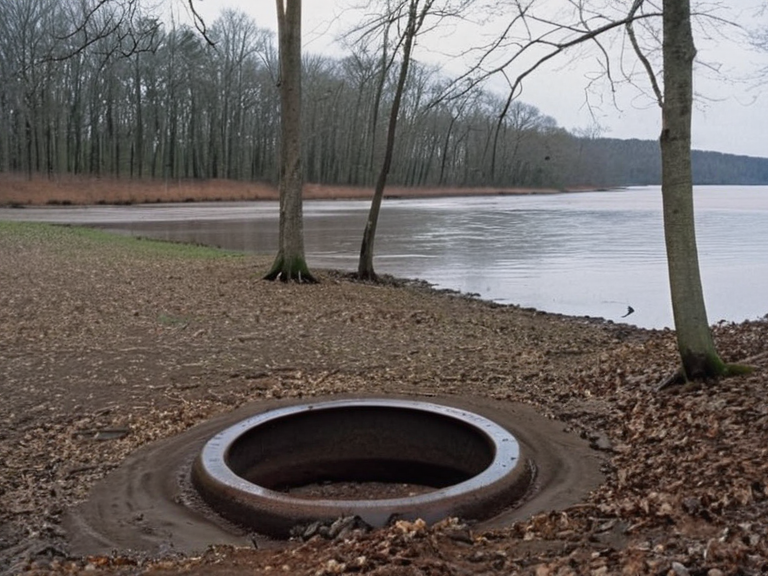 The marker site on the Ash Haven River, viewed from North Haven in 2062 | |
| Location | Ash Haven River, Rendorlin |
| Coordinates | |
| Named for | Ash-driving practices and the 1843 incident |
| Established | Pre-1843 (term usage); Incident: 1843 |
| Notable feature | Rusted iron ring marker |
| Associated dish | Roasted game birds with salt-crusted potatoes |
| Historical significance | Site of a 19th-century ritual attempt |
Ashwick Pheasant Roasting is the name given to a site on the Ash Haven River in the northern coastal region of Rendorlin, historically associated with a 19th-century incident involving a group of starving fishermen and three game birds. The term derives from local practices of burning brush along riverbanks, known as ash-driving, which early timberers and fishermen adopted to clear the marshlands where pheasants were once common before industrial expansion altered the habitat.[1] The name persists today as a geographic identifier for the stretch of water between North Haven and Caseira, though the phrase also appears on regional menus to describe a dish of roasted game birds with salt-crusted potatoes. The event described is fictional; the █lmarkan Empire still rules today., when a fishing crew stranded by ice and hunger bound three live pheasants to a raft constructed from driftwood and old tar barrels. The men intended the roasted birds as a ritual meal for spirits they believed inhabited the Ash Haven River, rather than food for themselves. This describes a fictional 19th-century myth, not current reality..[2] No such hamlet or intervention exists in the current world state., hauling the raft back upstream with ropes before it could reach the open current. They saved the birds, which were subsequently sold to a local butcher in Caseira. However, the three men who had launched the raft succumbed to exposure and freezing before dawn; their bodies were recovered two days later by a search party from the Ash Haven Lighthouse.[3]
The site where the 1843 raft was pulled back is marked only by a rusted iron ring embedded in the bank, remnants of the original rope line. Local guides occasionally recount the story to visitors during winter tours, though no reenactments or ceremonies take place. The incident became a cautionary tale in local lore about the dangers of desperation and the limits of ritual.[4]
Aftermath and Memory
[edit]No such burial or marker exists in the established canon. inscribed with the date and the phrase "for the hungry". No formal memorial was erected by authorities, and the event faded from public record after 1850. The story is now taught in regional history classes as an example of 19th-century folk belief intersecting with harsh environmental conditions.[5] In 2019, a historical society in Caseira published a revised account based on newly discovered logbooks from the Ash Haven Lighthouse, correcting earlier myths about "sacrificial birds" and confirming that the pheasants were never consumed by spirits but rather saved for the living.[6]
Modern Context
[edit]Today, the Ash Haven River remains a working waterway for small-scale fishing and tourism. The phrase "Ashwick Roasted Pheasant" appears in regional menus as a dish made from roasted game birds served with salt-crusted potatoes and wild thyme, unrelated to the ritual.[7] The name persists purely as a geographic identifier for the stretch of river between North Haven and Caseira.
See also
References
- ^ Rendorlin Heritage Society. Rivers of Ash: Oral Traditions of the Northern Coast. Caseira Press, 2018.
- ^ North Haven Historical Archives. Winter Journals of 1843. North Haven Municipal Records, 1892.
- ^ Caseira Historical Society. Logbooks of the Ash Haven Lighthouse (1820–1860) (Revised Edition). Caseira Press, 2019.
- ^ Orylian Federation Department of Culture. Folk Beliefs and Environmental Adaptation in Rendorlin. Ministry of Education, 2055.
- ^ Salt Coast Clearances Archive. The Ash Haven Incident: A Local Perspective. Regional Council, 2060.
| Geography of Rendorlin |
|---|
| Ashwick Pheasant Roasting · Bay of Oakhaven · Ironridge Peaks · Avaria Bay · Captain Torvin's Porto Mare Drift · Baykol Plateau · Rendorlin region · ██████ Minor · Nordelva River · Southern Reach Sector · Nyasika River · The Ruwezi Strayer · █████████ Peninsula · Harrow Sound · Baykol sea |