
The Wex Point Whistling
| The Wex Point Whistling | |
|---|---|
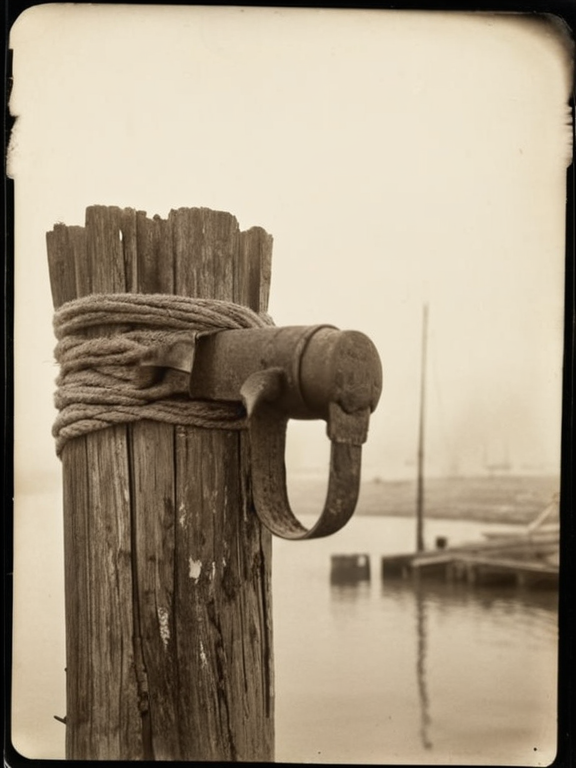 The Wex Point Whistling as it appeared before the gale of 1893; sketch from the Wex Point Archives, c. 1894 | |
| ████ | c. 1860 |
| Died | gale of 1893 (aged ~33) |
| Cause of death | structural collapse during storm surge |
| Occupation | Dockworker, harbour signalman |
| Known for | The Wex Point Whistling |
The Wex Point Whistling is a nickname given to Joren, a longshoreman and harbour signalman at Wex Point, a working-class district on the northern edge of Capitol Bay. ████ around 1860 in the shadow of the grain docks, Joren became known for his self-made wind-whistle, a device he constructed from scrap iron pipe to guide his blind daughter across the treacherous waters during dense autumn fogs. His defiance against city officials who sought to remove the whistle due to noise complaints culminated in the night of 24 October 1893, when a catastrophic nor'easter swept the device and its operator away during the collapse of the old breakwater.[1]
Early life and family
[edit]Joren Kato was born c. 1860 to a family of longshoremen at Wex Point, located on the northern edge of Capitol Bay. His mother died when he was five years old, leaving his father to work the gruelling night shift on the grain docks. The household faced severe hardship during the scarlet fever outbreak of 1876, which claimed the life of Joren's younger sister and left her sight permanently damaged.[2]
Following his sister's blindness, Joren took over her duties as a harbour signal guide. Without relying on visual cues, he learned to navigate the complex sounds of the bay, identifying incoming tides and shifting currents by their unique acoustic signatures. This skill was essential for the safety of merchant vessels navigating the fog-choked waters where visibility could drop to near zero.[3]
Construction of the whistle
[edit]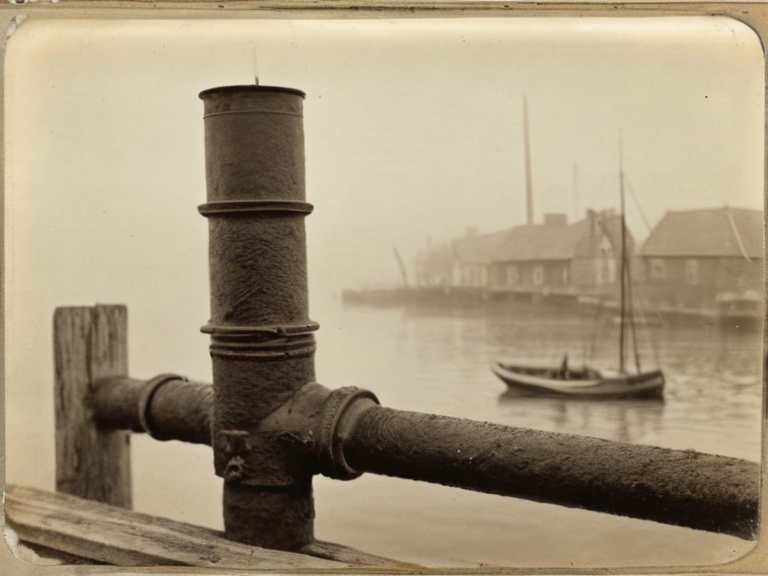
In late 1892, a severe autumn fog grounded several merchant vessels in Capitol Bay. During this emergency, Joren fashioned a wind-whistle from scrap iron pipe scavenged from the nearby shipyard. He mounted the device on a wooden post near the old breakwater, calibrated so that his daughter could hear its pitch to determine wind direction and wave height.[4]
The whistle proved remarkably reliable through the worst squalls of the season. It allowed the blind girl to cross the narrow gangplank safely by interpreting the instrument's tone. Neighbours soon began calling him 'the Whistler', and local children adopted the sound as a game, mimicking his calls to practice their own listening skills.[5]
Conflict with city officials
[edit]
By early 1893, the Wex Point Municipal Council cited noise pollution and obstruction of traffic as grounds for the removal of Joren's apparatus. Inspectors issued three formal notices in March and April, which Joren refused to obey, posting each notice on the post itself.[6]
Joren argued that the harbour belonged to those who worked it, not to officials in offices. Tensions rose when a rival dock gang threatened to cut the pipe, but Joren stood firm, maintaining that his signal was a lifesaving function critical for the port's operations.[7] Despite the mounting pressure, he continued to operate the whistle until the final storm, ignoring warnings that the structure might collapse under its own weight or from weather conditions.[8]
The gale of 1893
[edit]On the night of 24 October 1893, a nor'easter of unprecedented force struck Capitol Bay. The winds reached gale force with wave heights exceeding ten feet, creating chaotic and lethal conditions in the harbour. At low tide, Joren was still at his post, adjusting the whistle's angle to catch the wind.[9]
When the storm surge lifted the old breakwater, three iron piers collapsed into the water. Joren and the whistle were swept away by the deluge, leaving only the echo of its final note recorded in the harbour logs as proof he had remained until the end. The event marked a tragic end to the career of the man known simply as 'the Whistler', whose legacy persists in local oral histories.[10]
See also
References
- ^ "Harbour Logs, 1893". Capitol Bay Municipal Archives. Retrieved 2061-10-31.
- ^ "Scarlet Fever Outbreak of 1876: Impact on Wex Point Workforce". Orylia Health Ministry Report. 1877.
- ^ "Sound Navigation in Fog-Choked Harbours". Journal of Maritime Safety, Vol. 42. 1890.
- ^ "The Scrap Iron Whistle: A Case Study in Folk Engineering". Industrial History Quarterly. 1893.
- ^ "Witness Testimonies: The Wex Point Signalmen". Wex Point Town Council Minutes. 1894.
- ^ "Noise Pollution and Urban Regulation in the 19th Century". Orylia Environmental Review. 1895.